
Pebble Creek Condos for Sale in Pelican Bay, Naples, FL
Pebble Creek at Pelican Bay is one condominium of 264 residences in 17 buildings at 7606 to 7750 Pebble Creek Cir, Naples, FL 34108, inside Pelican Bay. This page reads the public record for that one address range: the county roll, the county building list, the state condominium and elevator files, two dated listing snapshots and the recorded deeds. Where a record leaves something unsaid, we say so instead of filling the gap.
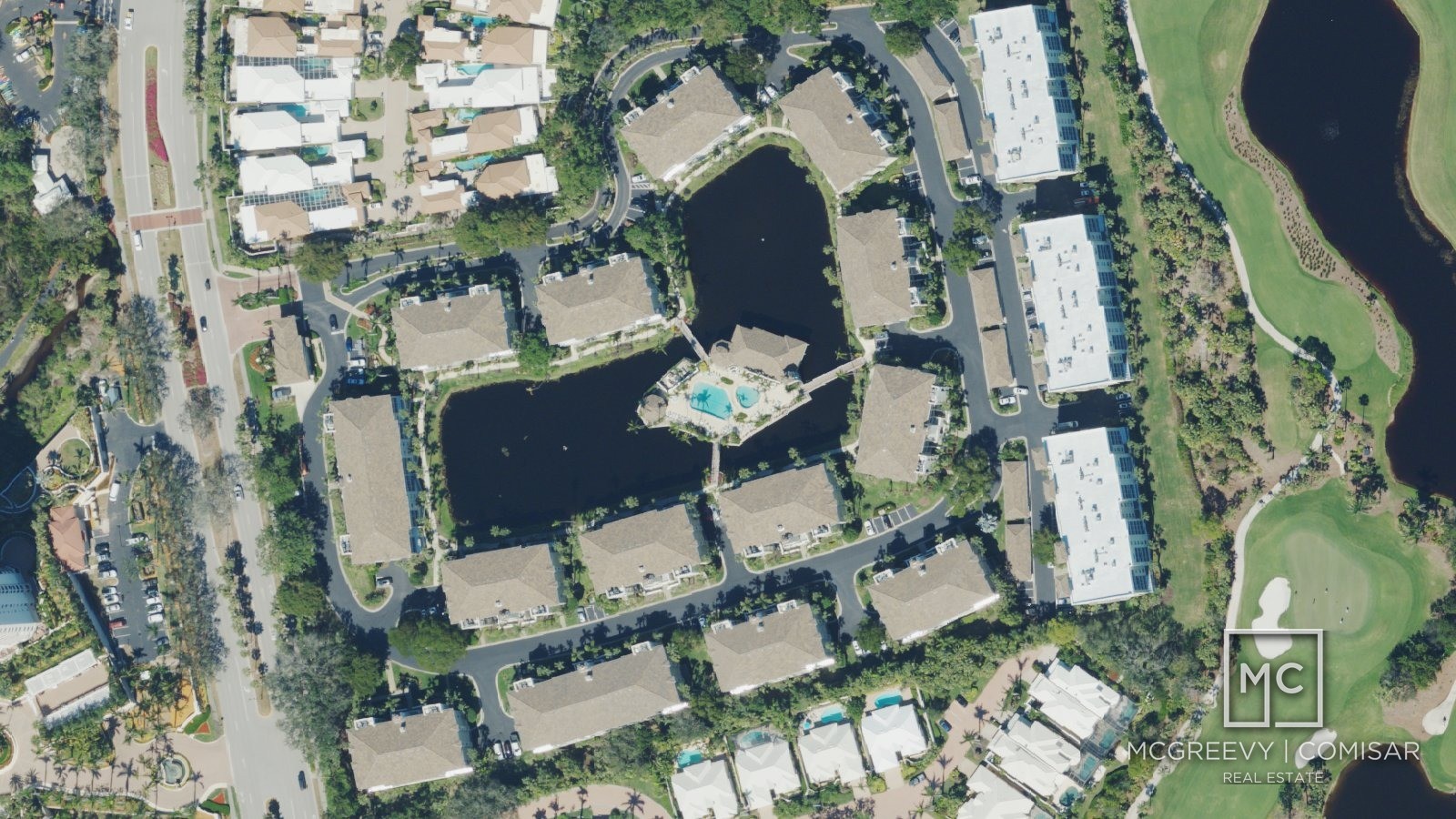
By Jesse McGreevy and Marc Comisar, Domain Realty Group. Data updated: November 2026. Call Domain Realty Group at 239-441-2816.
Pebble Creek at Pelican Bay at a glance
Pebble Creek Condominium Association, Inc. manages the condominium created by a declaration recorded March 16, 1994. That one association covers every building on the circle, so a buyer in any of the 17 buildings joins the same association, reads the same declaration and shares the same common elements.
The county roll files Pebble Creek as record 539500, PEBBLE CREEK A CONDOMINIUM, with 264 parcels, and the state condominium file lists project PR1P022419, PEBBLE CREEK CONDO, with 264 units.
The two counts match, which matters more than it might seem. When a county roll and a state file disagree on how many residences a condominium holds, it usually means a phase was added, a unit was split or a record lags behind. Here the county and the state both land on the same total, and every one of those parcels sits on Pebble Creek Cir under the one county record. This page works from record 539500 alone.
Each residence is its own tax parcel on the county roll. That gives every unit its own assessed value, its own tax bill and its own deed history, and it is the reason this page can count recorded sales one residence at a time rather than estimating from a building total.
Pebble Creek in numbers
- Residences: 264, all on the county roll as separate parcels under record 539500.
- Buildings: 17, each with one street number on Pebble Creek Cir.
- Residences per building: twelve buildings of 12 residences, two of 18 and three of 28.
- County certificates of occupancy: from 1994 through 1996.
- Roll sizes: from 1,327 to 2,490 sq ft of living area.
- Recorded sales: 51 qualified county deeds in the 60 months to August 31, 2026.
Each line above is drawn from a record named in the sections that follow, and each of those sections gives the record, its date and what it does not say.
Where Pebble Creek sits: 7606 to 7750 Pebble Creek Cir
Pebble Creek sits about 2,709 feet from the Gulf shoreline in a straight line from the parcel edge (Domain Realty Group measurement from county parcel lines). That figure is a straight line on a map, measured from the nearest edge of the condominium parcel to the shoreline. It is not a driving distance and it says nothing about what any one residence looks out on. Distances by road appear later on this page, taken from our own route table.
Each of the 17 buildings carries one street number on Pebble Creek Cir, from 7606 to 7750.
Building numbers and street numbers do not run in step. Building 3, for instance, carries 7693 while Building 4 carries 7638, so a listing that names only a building number, or only a street number, needs the other half checked against the table further down. When you request documents, give the association both the building number and the unit number, since the county roll keys every residence to its building.
The county subdivision layer places Pebble Creek in Plat Book 21, pages 74 and 75.
The plat is the recorded drawing of the land. It fixes where the condominium parcel begins and ends, which is why a title company will cite it, and it is a different document from the declaration that created the condominium on that land.
Which parcels touch the Pebble Creek line
On the county parcel map, the Pebble Creek parcel touches Cocobay to the north, Carlton Place to the south and the Club at Pelican Bay golf parcel to the southeast.
Those three are simply the parcels whose lines meet the Pebble Creek line on the county map. Each is a separate property with its own owners and its own records, and nothing on this page describes them beyond that shared boundary. The county draws Pebble Creek itself as a single ring holding all 17 buildings; the parcel layer shows no separate parcel for any building inside it.
Because the parcel map draws no building outlines, this page does not place individual buildings on the circle. If the spot a residence occupies matters to you, visit with the street number in hand or ask the association for its site plan.
Jurisdiction and mailing address
Pebble Creek is in unincorporated Collier County, with a Naples mailing address and ZIP 34108, inside the Pelican Bay PUD and the North Collier Fire Control and Rescue District.
In practice, unincorporated means no city government sits between the residence and the county. Building permits, code questions and the property tax bill all run through Collier County offices, while the Naples name on the envelope is a postal label rather than a city limit. The Pelican Bay PUD is the county zoning plan that shaped the whole community, and the fire district levies its own line on the tax bill. Later sections of this page cover the Pelican Bay layers above the condominium association and the taxes on the 2026 roll.
Seventeen Pebble Creek buildings and 264 residences
Twelve buildings (1 to 7 and 9 to 13) hold 12 residences each, buildings 8 and 14 hold 18 each, and buildings 15, 16 and 17 hold 28 each, 264 in all. County certificates of occupancy run from March 14, 1994 (Building 1, 7606) to July 24, 1996 (Building 17, 7687): eleven buildings in 1994, four in 1995 and two in 1996.
The certificate of occupancy is the county's sign-off that a new building may be lived in. For Pebble Creek, the year the county roll gives as each building's year built matches the year on its certificate, so the two records tell one consistent story. The certificates span a little over two years, with the larger buildings coming last: buildings 15, 16 and 17 received their certificates from late 1995 through 1996, after every smaller building already had its own.
That sequence matters when you read a resale disclosure or an inspection report. Two residences on the same circle can differ in age by more than two years, so the certificate date for the specific building is the one to use, not a single date for the whole condominium.
Street numbers and occupancy dates for the 17 buildings
The table lists each building as the county building list and the county roll record it.
| Building | Address | Residences | County certificate of occupancy |
|---|---|---|---|
| Building 1 | 7606 Pebble Creek Cir | 12 | March 14, 1994 |
| Building 2 | 7622 Pebble Creek Cir | 12 | April 15, 1994 |
| Building 3 | 7693 Pebble Creek Cir | 12 | August 29, 1994 |
| Building 4 | 7638 Pebble Creek Cir | 12 | May 13, 1994 |
| Building 5 | 7654 Pebble Creek Cir | 12 | June 10, 1994 |
| Building 6 | 7709 Pebble Creek Cir | 12 | October 26, 1994 |
| Building 7 | 7670 Pebble Creek Cir | 12 | July 5, 1994 |
| Building 8 | 7725 Pebble Creek Cir | 18 | March 2, 1995 |
| Building 9 | 7686 Pebble Creek Cir | 12 | August 3, 1994 |
| Building 10 | 7702 Pebble Creek Cir | 12 | September 30, 1994 |
| Building 11 | 7741 Pebble Creek Cir | 12 | June 8, 1995 |
| Building 12 | 7718 Pebble Creek Cir | 12 | November 30, 1994 |
| Building 13 | 7734 Pebble Creek Cir | 12 | December 22, 1994 |
| Building 14 | 7750 Pebble Creek Cir | 18 | May 5, 1995 |
| Building 15 | 7655 Pebble Creek Cir | 28 | October 30, 1995 |
| Building 16 | 7671 Pebble Creek Cir | 28 | February 12, 1996 |
| Building 17 | 7687 Pebble Creek Cir | 28 | July 24, 1996 |
Read the dates down the column and the order is not strictly by building number. Building 11 received its certificate in 1995, after Building 12 and Building 13 had theirs in 1994, and Building 3 followed buildings 4, 5, 7 and 9. The building numbers are labels on the county list, not a record of which went up first.
Residences per building
The 264 residences split three ways. The twelve-residence buildings account for 144 of them, buildings 8 and 14 add 36, and buildings 15, 16 and 17 hold the rest. Put another way, a little under a third of all Pebble Creek residences sit in the three largest buildings, even though those three make up fewer than a fifth of the buildings on the circle.
That split shapes nearly every figure further down. Sizes differ by building set, the roll values differ with them, and recorded sales follow the same lines. A count for the whole condominium blends all three sets together, so when the sections that follow break a figure out, they use these same three sets of buildings, and any table that lists single buildings gives dated values only.
For a buyer, the practical question is which set a given residence belongs to. The building number answers it at once: buildings 15, 16 and 17 are the larger buildings, buildings 8 and 14 are the middle set, and every other building is one of the twelve-residence buildings.
How many levels at Pebble Creek: what each record says
No single public record gives Pebble Creek's buildings a height in plain terms. The county roll carries no field for stories at all, the state elevator file counts stops rather than floors, and the listing service sorts buildings into broad labels. Rather than pick one and present it as settled, we set the three readings next to each other with their dates, so you can see where they agree and where they leave room.
Three records side by side
By our reading of the county roll's unit numbers, buildings 1 to 14 hold three residential levels and buildings 15, 16 and 17 hold five. The state elevator file lists one elevator with 4 landings in each of buildings 1 to 14 and two elevators with 6 landings in each of buildings 15 to 17 (as of October 28, 2026), and the association's site says the elevators begin at the garage level. On the Naples MLS export of October 29, 2026, listings in buildings 15 to 17 carry the Building Design label Mid Rise (4-7) and the others Low Rise (1-3).
Consistent with a garage level below the residences, by our reading.
The first reading is ours. We take the level from the first digit of each county unit number; the county itself does not state a level. The second is the state's count of elevator stops, and a stop is not the same thing as a residential floor. The third is a category that listing agents pick from a short menu, built for search filters rather than for building records.
Where the records leave a question open, the building plans and the association's records are the place to settle it. If the number of floors in a particular building bears on your purchase, for insurance, for a lender's questionnaire or for your own plans, ask the association in writing and keep its answer with your contract file.
Residence sizes on the county roll
The 2026 county roll lists Pebble Creek residences from 1,327 to 2,490 sq ft, with a median size of 1,526 sq ft. By our reading of the unit numbers, the 2,388 and 2,490 sq ft residences sit only on the fifth level of buildings 15, 16 and 17.
The county measures living area for its own purposes, and its figure is the one used throughout this page so that every size and every per-foot figure rests on one consistent basis. A listing sheet, an appraisal or the association's own description can arrive at a different number for the same residence, depending on what each one counts. When size matters to a price, ask which source a figure comes from before setting two residences against each other.
Square footage in each set of buildings
The table counts residences by roll size within each set of buildings, from the 2026 county roll.
| Buildings | Roll size (sq ft) | Residences at that size |
|---|---|---|
| 1 to 7 and 9 to 13 | 1,327 | 72 |
| 1 to 7 and 9 to 13 | 1,526 | 72 |
| 8 and 14 | 1,327 | 24 |
| 8 and 14 | 1,526 | 12 |
| 15, 16 and 17 | 1,379 | 24 |
| 15, 16 and 17 | 1,641 | 18 |
| 15, 16 and 17 | 1,688 | 6 |
| 15, 16 and 17 | 1,813 | 18 |
| 15, 16 and 17 | 1,857 | 6 |
| 15, 16 and 17 | 2,388 | 6 |
| 15, 16 and 17 | 2,490 | 6 |
Two patterns stand out. The twelve-residence buildings and buildings 8 and 14 share the same two sizes, split evenly in the first set and weighted toward the smaller size in the second. Buildings 15, 16 and 17 carry seven different sizes, the widest spread on the circle, and every residence above 1,857 sq ft is in those three buildings. A shopper who wants one of the largest roll sizes is, by the county's measure, looking at a short list of residences in a single set of buildings.
Sizes in the association's own words
The association's site (read November 11, 2026) gives sizes of "1300-1900 square feet" and notes that "The penthouses are larger."
The association's range is a rounded description written for its own readers, and it lines up broadly with the roll: the county's smallest size sits just above the bottom of that range, and the county's two largest sizes sit above its top, which fits the association's remark about its larger residences. The association publishes no floor plan names, so this page prints none. If a seller or a listing uses a plan name, ask what it refers to and check the residence against its roll size.
Pebble Creek homes for sale now
Listings at Pebble Creek come and go week by week, and any count printed on a page is out of date soon after it is written. What follows are two dated snapshots from the listing service, kept separate from the county records below and labelled with the day each was taken, followed by a live search link that refreshes on its own.
Two MLS snapshots, dated
The Naples MLS export of October 29, 2026 holds 14 Pebble Creek rows: 5 active and 9 sold, with closings dated December 15, 2025 to October 14, 2026.
Active list prices on that export ran from $899,000 to $1,199,990 (export of October 29, 2026).
The Southwest Florida MLS closing list pulled October 7, 2026 shows 8 closings in the last 12 months at a median of $1,130,000 and 49 closings in 60 months at a median of $1,150,000 (range $675,000 to $1,775,000).
These are listing-service records. They are entered by agents, they reflect asking prices and reported closings, and they can be corrected after the fact. The recorded deed is the county's version of the same event, and it is the one this page relies on for sale counts and price figures in the next section. The two sources measure different things over different windows, so they are shown apart rather than blended.
Before you book a showing, check that the residence is still active and confirm the building and unit numbers against the county table above. If a listing describes the size, the height of the building or the association's rules, ask for the document behind each statement.
see every active Pebble Creek listing on our search
Pebble Creek county sales in the last 12 and 60 months
We tracked every sale figure in this section from Collier County deed records for the 264 Pebble Creek parcels, not from listing data. The figures come from deeds recorded with the county and marked by the county as qualified, meaning the county treats them as arm's-length sales at a market price. Transfers between relatives, deeds to a trust, foreclosure transfers and similar recordings are left out, and this page also sets aside deeds recorded below a six-figure price floor. Every window ends August 31, 2026, the last full month in the county file read for this page.
Recent qualified deeds in three periods
From September 1, 2025 to August 31, 2026, six qualified county deeds recorded at Pebble Creek, median $1,048,750, from $882,500 to $1,225,000.
In the prior 12 months, September 1, 2024 to August 31, 2025, ten qualified county deeds recorded, median $1,170,000, from $995,000 to $1,525,000.
Over the 60 months from September 1, 2021 to August 31, 2026, 51 qualified county deeds recorded at Pebble Creek, median $1,125,000, from $675,000 to $1,775,000.
Read the three periods together and keep the counts in mind. A year with six recorded sales gives a midpoint that a single sale can shift, and which buildings happened to sell in a given year matters as much as anything else: a year weighted toward the larger buildings reads differently from a year weighted toward the twelve-residence buildings. The 60-month window, with 51 deeds across every set of buildings, is the steadier of the three. The section on sales by building group further down splits these same deeds by set of buildings.
A recorded deed price also says nothing about condition. A residence with a new kitchen and a residence last updated decades ago both record as one deed. Pair the county figures with what you see inside the residence, and ask the seller what work has been done and when.
Dollars per square foot on the roll basis
Across those 51 qualified county deeds, the median of the per-deed ratios is $754 per roll sq ft, using each residence's size on the county roll.
The method is simple to repeat. For each qualified deed, divide the recorded price by that residence's living area on the county roll, then take the middle of the resulting list. Using the roll size for every deed keeps the basis the same from one sale to the next, which a mix of sizes from different sources would not.
Use the per-foot figure as a check, not as a price. Smaller residences can carry more dollars per foot than larger ones in the same building, and the largest roll sizes, all in buildings 15, 16 and 17, sit at the far end of the range, so a single ratio applied across the whole condominium will miss in both directions. It is most useful when you set a list price for a particular residence against its own roll size and see whether the result sits inside or outside the range the deeds have shown.
Sales by building group
Pebble Creek holds 264 residences in 17 buildings at 7606 to 7750 Pebble Creek Cir, and the county roll does not treat those buildings as one uniform stock. Buildings 1 to 7 and 9 to 13 each hold 12 residences, buildings 8 and 14 each hold 18, and buildings 15, 16 and 17 each hold 28. Because the mix of roll sizes differs from one group to the next, a single price figure for the whole condominium can hide more than it shows. Splitting the qualified county deeds by building group lets a buyer or seller set a residence beside sales from buildings of the same size before reading anything into a number.
The groups below follow the roll's building numbers. They say nothing about where a building stands on the circle, which floor a residence occupies or which way it faces; those details belong to the individual listing and the unit's own records, and they are worth confirming in person.
Over the 60 months to August 31, 2026, the twelve-residence buildings recorded 29 qualified county deeds, median $1,015,000, from $675,000 to $1,476,000.
Over the same 60 months, buildings 15, 16 and 17 recorded 20 qualified county deeds, median $1,190,000, from $800,000 to $1,775,000.
Buildings 8 and 14 recorded two qualified county deeds in those 60 months, $800,000 on September 14, 2022 and $1,455,000 on February 27, 2024.
Two deeds cannot carry a midpoint, so those two buildings are shown as dated values and nothing more. Read them as two separate closings, each with its own residence, floor and condition, and not as a price level for the pair of buildings.
The shorter windows are thinner still, which is why most of the figures below are printed as lists rather than summarized.
From September 1, 2024 to August 31, 2025, the twelve-residence buildings recorded six qualified county deeds, median $1,125,000, and buildings 15, 16 and 17 recorded four: $1,160,000, $1,180,000, $1,250,000 and $1,525,000.
From September 1, 2025 to August 31, 2026, the twelve-residence buildings recorded four qualified county deeds ($882,500, $925,000, $937,500 and $1,160,000), buildings 15, 16 and 17 recorded two ($1,200,000 and $1,225,000) and buildings 8 and 14 recorded none.
A handful of deeds a year is a short record. One renovated residence or one dated interior can move the figures for a group by a wide margin, so a change from one twelve-month window to the next says little on its own about where Pebble Creek prices are heading. The useful work is closer to the ground: find the closings in the same building group, then set the size, the floor, the condition and the date of each one beside the residence you are weighing.
All 51 deeds, dated and by building
Every row below is a qualified county deed recorded at Pebble Creek between September 1, 2021 and August 31, 2026, listed by recording date. Each building carries one street address on the county roll, so the address column identifies the building, not the residence. When the same building address appears on several rows, those are separate recorded deeds in that building; the table does not say which residence changed hands, and it should not be read as a resale history for any one home.
| County deed date | Building | Address | Amount |
|---|---|---|---|
| 2021-09-04 | Building 6 | 7709 Pebble Creek Cir | $700,000 |
| 2021-09-16 | Building 6 | 7709 Pebble Creek Cir | $750,000 |
| 2021-09-20 | Building 15 | 7655 Pebble Creek Cir | $800,000 |
| 2021-10-01 | Building 6 | 7709 Pebble Creek Cir | $675,000 |
| 2021-10-25 | Building 16 | 7671 Pebble Creek Cir | $825,000 |
| 2021-10-29 | Building 4 | 7638 Pebble Creek Cir | $680,000 |
| 2022-01-13 | Building 3 | 7693 Pebble Creek Cir | $856,000 |
| 2022-04-26 | Building 9 | 7686 Pebble Creek Cir | $1,215,800 |
| 2022-05-02 | Building 2 | 7622 Pebble Creek Cir | $1,476,000 |
| 2022-06-23 | Building 3 | 7693 Pebble Creek Cir | $870,000 |
| 2022-06-24 | Building 11 | 7741 Pebble Creek Cir | $837,500 |
| 2022-07-09 | Building 9 | 7686 Pebble Creek Cir | $1,300,000 |
| 2022-09-14 | Building 8 | 7725 Pebble Creek Cir | $800,000 |
| 2022-12-08 | Building 12 | 7718 Pebble Creek Cir | $1,000,000 |
| 2022-12-16 | Building 3 | 7693 Pebble Creek Cir | $825,000 |
| 2022-12-20 | Building 11 | 7741 Pebble Creek Cir | $1,010,000 |
| 2023-02-24 | Building 7 | 7670 Pebble Creek Cir | $1,015,000 |
| 2023-03-29 | Building 13 | 7734 Pebble Creek Cir | $1,020,000 |
| 2023-03-31 | Building 16 | 7671 Pebble Creek Cir | $1,145,000 |
| 2023-04-04 | Building 1 | 7606 Pebble Creek Cir | $1,150,000 |
| 2023-04-14 | Building 15 | 7655 Pebble Creek Cir | $850,000 |
| 2023-04-20 | Building 15 | 7655 Pebble Creek Cir | $1,650,000 |
| 2023-08-04 | Building 17 | 7687 Pebble Creek Cir | $1,155,000 |
| 2023-08-16 | Building 15 | 7655 Pebble Creek Cir | $1,050,000 |
| 2023-08-21 | Building 6 | 7709 Pebble Creek Cir | $1,150,000 |
| 2023-08-25 | Building 17 | 7687 Pebble Creek Cir | $1,050,000 |
| 2023-10-04 | Building 17 | 7687 Pebble Creek Cir | $1,495,000 |
| 2023-11-30 | Building 17 | 7687 Pebble Creek Cir | $1,225,000 |
| 2023-12-14 | Building 15 | 7655 Pebble Creek Cir | $1,100,000 |
| 2024-02-27 | Building 8 | 7725 Pebble Creek Cir | $1,455,000 |
| 2024-04-16 | Building 15 | 7655 Pebble Creek Cir | $1,365,000 |
| 2024-04-17 | Building 2 | 7622 Pebble Creek Cir | $1,315,000 |
| 2024-05-14 | Building 15 | 7655 Pebble Creek Cir | $1,725,000 |
| 2024-05-19 | Building 17 | 7687 Pebble Creek Cir | $1,775,000 |
| 2024-07-30 | Building 4 | 7638 Pebble Creek Cir | $1,125,000 |
| 2024-12-19 | Building 4 | 7638 Pebble Creek Cir | $1,225,000 |
| 2025-02-13 | Building 7 | 7670 Pebble Creek Cir | $1,350,000 |
| 2025-02-25 | Building 13 | 7734 Pebble Creek Cir | $1,100,000 |
| 2025-04-07 | Building 12 | 7718 Pebble Creek Cir | $1,150,000 |
| 2025-04-28 | Building 10 | 7702 Pebble Creek Cir | $995,000 |
| 2025-04-30 | Building 16 | 7671 Pebble Creek Cir | $1,180,000 |
| 2025-06-16 | Building 7 | 7670 Pebble Creek Cir | $1,100,000 |
| 2025-07-18 | Building 15 | 7655 Pebble Creek Cir | $1,160,000 |
| 2025-08-05 | Building 17 | 7687 Pebble Creek Cir | $1,250,000 |
| 2025-08-20 | Building 16 | 7671 Pebble Creek Cir | $1,525,000 |
| 2025-12-10 | Building 13 | 7734 Pebble Creek Cir | $1,160,000 |
| 2026-02-04 | Building 17 | 7687 Pebble Creek Cir | $1,225,000 |
| 2026-04-16 | Building 9 | 7686 Pebble Creek Cir | $925,000 |
| 2026-05-29 | Building 5 | 7654 Pebble Creek Cir | $937,500 |
| 2026-06-12 | Building 17 | 7687 Pebble Creek Cir | $1,200,000 |
| 2026-08-26 | Building 9 | 7686 Pebble Creek Cir | $882,500 |
The dates are county recording dates. A deed is usually recorded at or shortly after closing, so the date in the table can sit a few days away from the day keys changed hands. The amounts are the consideration the county records for each deed; they do not separate out furniture, a golf cart or any credit agreed between the parties, and they say nothing about the condition a residence was in when it sold. Building 14 has no row in this window, and several other buildings appear only once or twice. An empty stretch in the table is a quiet period in the records for that building, not a sign of any problem with it.
When you use these rows to judge an asking price, start with the deeds from the same building group, then narrow to the most recent ones. From there, ask the listing agent for the residence's size on the roll, its floor and what has been updated, and set those beside each deed you are leaning on. A deed from a different group, or from several years back, is context rather than a comparable.
Every qualified county sale since 1994
From 1994 to September 21, 2026 the county records 649 qualified county sales at Pebble Creek. We tracked each of those deeds from the county file by recording year. A qualified sale is a deed the county property appraiser treats as a market transaction between unrelated parties. Transfers into a trust, gifts between relatives, foreclosure deeds and similar recordings stay out of the count, so the totals below are smaller than the number of deeds actually recorded against these parcels. That filter is what makes the year figures comparable with one another: each row counts only deeds the county was prepared to treat as sales.
The table counts qualified county sales by year; the 1994 to 1996 rows mix first sales and early resales, and the 2026 row runs to September 21, 2026, from the county bundle of October 27, 2026.
The early rows are large because Pebble Creek was new and its residences were being sold for the first time, with the occasional early resale recorded alongside them. Once the first sales ran their course, the rows settle into resales, and the yearly count moves with how many owners chose to sell in a given year. Some years record only a handful of sales, and in those rows a single closing can shift the price column noticeably, so read any one year together with its neighbours rather than alone.
The price column gives the midpoint of each year's qualified sales: half of that year's deeds recorded a higher amount and half a lower one. It mixes every building group and every floor size in the condominium, and the share of large and small residences that happened to sell changes from year to year. A row is a record of what closed in that year, not a valuation of any one residence.
57 of the 264 residences show no qualified resale since the first recorded sale.
Those residences have stayed with their original buyers, or have changed hands only through transfers the county does not count as sales, such as a move into a trust or an inheritance. For a buyer, a residence with no resale on record may still hold older interiors and systems, which is a good reason to ask for the permit history and a full inspection before contract.
Qualified county sales by year
| Year | Qualified county sales | Midpoint price (half sold for less, half for more) |
|---|---|---|
| 1994 | 123 | $164,000 |
| 1995 | 85 | $182,000 |
| 1996 | 52 | $244,950 |
| 1997 | 32 | $259,900 |
| 1998 | 29 | $220,000 |
| 1999 | 20 | $222,500 |
| 2000 | 11 | $274,900 |
| 2001 | 8 | $370,000 |
| 2002 | 15 | $415,000 |
| 2003 | 13 | $369,000 |
| 2004 | 18 | $410,000 |
| 2005 | 10 | $527,500 |
| 2006 | 5 | $795,000 |
| 2007 | 5 | $545,000 |
| 2008 | 10 | $587,750 |
| 2009 | 10 | $405,000 |
| 2010 | 11 | $570,000 |
| 2011 | 10 | $437,500 |
| 2012 | 11 | $469,000 |
| 2013 | 19 | $464,500 |
| 2014 | 8 | $464,500 |
| 2015 | 13 | $560,000 |
| 2016 | 11 | $625,000 |
| 2017 | 22 | $584,000 |
| 2018 | 12 | $640,000 |
| 2019 | 12 | $605,000 |
| 2020 | 6 | $632,500 |
| 2021 | 23 | $699,000 |
| 2022 | 10 | $935,000 |
| 2023 | 13 | $1,145,000 |
| 2024 | 7 | $1,365,000 |
| 2025 | 10 | $1,160,000 |
| 2026 (part year, see note) | 5 | $937,500 |
The 2026 row is a part year and will change once the rest of the year's deeds are recorded and qualified. Our figures come from the county's sales file as it stood on the bundle date above; a deed recorded after that date, or one the county had not yet qualified, does not appear in any row on this page.
First recorded sales by building, 1994 to 1998
For the original sales, the state condominium developer file lists PEBBLE CREEK PARTNERS, LTD. as the developer of Pebble Creek (as of the October 28, 2026 file). The first sales table gives date spans only: the first recorded sale in each building and the date of its last residence's first recorded sale.
Read across the rows, the table shows a condominium that came to market building by building rather than all at once. The earliest first sale on record is in Building 1 on March 28, 1994. In several of the twelve-residence buildings every residence had its first recorded sale within a few weeks or months. Other buildings took longer: in buildings 15, 16 and 17 the first sales ran from late 1995 into 1998, and the last first sale in Building 8 was recorded on June 23, 1998.
The table is a record of deed dates only. It does not say when a building was finished or occupied, and it should not be read as a construction sequence or a map of the circle. For a residence you are considering, the county roll and the deed chain for that parcel give its own first sale and every later one, and a title company can pull them for you before closing.
Opening and closing dates of the first sales
| Building | Address | First recorded sale in the building | Last residence's first recorded sale |
|---|---|---|---|
| Building 1 | 7606 Pebble Creek Cir | March 28, 1994 | April 29, 1994 |
| Building 2 | 7622 Pebble Creek Cir | April 24, 1994 | May 24, 1994 |
| Building 3 | 7693 Pebble Creek Cir | September 9, 1994 | October 24, 1994 |
| Building 4 | 7638 Pebble Creek Cir | May 20, 1994 | July 11, 1994 |
| Building 5 | 7654 Pebble Creek Cir | June 1, 1994 | July 11, 1994 |
| Building 6 | 7709 Pebble Creek Cir | November 2, 1994 | January 3, 1996 |
| Building 7 | 7670 Pebble Creek Cir | July 11, 1994 | April 22, 1996 |
| Building 8 | 7725 Pebble Creek Cir | February 13, 1995 | June 23, 1998 |
| Building 9 | 7686 Pebble Creek Cir | August 4, 1994 | December 30, 1994 |
| Building 10 | 7702 Pebble Creek Cir | October 5, 1994 | November 22, 1994 |
| Building 11 | 7741 Pebble Creek Cir | July 29, 1994 | July 5, 1995 |
| Building 12 | 7718 Pebble Creek Cir | December 9, 1994 | January 23, 1995 |
| Building 13 | 7734 Pebble Creek Cir | December 30, 1994 | July 3, 1995 |
| Building 14 | 7750 Pebble Creek Cir | May 11, 1995 | September 1, 1995 |
| Building 15 | 7655 Pebble Creek Cir | November 9, 1995 | February 11, 1997 |
| Building 16 | 7671 Pebble Creek Cir | February 23, 1996 | April 24, 1998 |
| Building 17 | 7687 Pebble Creek Cir | June 23, 1996 | February 24, 1998 |
Property taxes and the 2026 roll at Pebble Creek
Pebble Creek lies in unincorporated Collier County, so every residence carries the same layer of county, school, water management and district levies. The figures below come from the 2026 county roll for all 264 parcels and describe the bills the current owners face. They are a fair starting point, but a buyer's own bill can differ from the seller's, sometimes by a large amount.
The 2026 tax bill in figures
On the 2026 roll Pebble Creek sits in millage area 79 at 9.4553 mills; the median 2026 total tax across the 264 parcels is $9,180, by building group $8,893 in the twelve-residence buildings, $8,817 in buildings 8 and 14 and $10,685 in buildings 15, 16 and 17.
The median 2026 just value across the 264 parcels is $937,970.
82 of the 264 parcels carry a homestead exemption on the 2026 roll.
Just value is the property appraiser's market value estimate as of January 1. The bill, though, is figured on the assessed value, and Florida law limits how far the assessed value of a homesteaded residence can move from one year to the next. That cap ends when the residence sells. The year after a sale the parcel is reassessed from its just value, so a buyer who steps into a residence the seller has held for many years should expect a different bill from the one on the seller's statement.
A buyer who makes the residence a permanent home can apply for a homestead exemption of their own, which lowers the taxable value and starts a new cap from the year it takes effect. A buyer who will not live there full time gets no homestead exemption, and the non-homestead assessment rules apply instead. Either way, the property appraiser's estimator gives a closer figure than the seller's last bill, and it is worth running before you settle on a budget.
The non-ad valorem line
Every one of the 264 parcels shows $1,250.00 in non-ad valorem charges on the 2026 roll, equal to the Pelican Bay Services Division FY2027 assessment ($789.07 plus $460.93, as the Division publishes it).
A non-ad valorem charge is a flat amount per parcel, not a rate on value, so it does not move with the price of the residence or with a homestead exemption. It sits on the same county tax bill as the millage and is paid with it. Because the amount is the same on every parcel at Pebble Creek, it adds the same sum to each owner's bill whether the residence is the smallest on the roll or the largest.
Association costs and what is not published
The Pebble Creek association does not publish its assessment; ask the seller for the current budget and the association's estoppel certificate, and read the s. 718.503 resale disclosure before contract. The association's site, read November 11, 2026, says "Association dues at Pebble Creek are among the lowest in Pelican Bay"; the association publishes no figure.
That leaves a gap a buyer has to close with documents rather than with a quote from a website. The amount each residence pays toward the common expenses is set by the declaration, and the yearly budget the board adopts turns that share into a figure. Neither is public, so the seller and the association are the only reliable sources. A number heard in conversation or copied from an old listing is worth checking against the budget itself.
The estoppel certificate is governed by s. 718.116, Florida Statutes.
An estoppel certificate is the association's written statement of what is owed on a residence as of a stated date: the regular assessment, any unpaid amounts and any special assessment already approved. A title company normally orders it as closing approaches, and the buyer can rely on the figures it states. It is the firmest number a buyer will get from the association before closing.
What to ask the seller for
Ask for the documents below early, before inspection deadlines start to run, and read them together.
- The current year's adopted budget, showing the amount each residence pays and how often it is billed.
- The most recent financial report the association has issued to owners.
- The declaration of condominium, the articles, the bylaws and the current rules, with any amendments.
- The question and answer sheet that Florida condominium law asks associations to prepare for buyers.
- Recent board meeting minutes, which often mention planned work, insurance renewals and any special assessment under discussion before it is approved.
- The name of the person at the association who handles estoppel requests and resale paperwork.
If the seller cannot produce a document, the association can, and your contract can give you time to read what arrives. The documents describe the building you are buying into; the website describes the community in general terms.
Pelican Bay layers above the Pebble Creek association
Pebble Creek sits inside Pelican Bay, and owners there pay into more than one body. The condominium association runs the buildings and the common elements. Above it, the Pelican Bay Foundation runs the shared Pelican Bay amenities and its own rules, and the Pelican Bay Services Division charge arrives on the county tax bill, as the section on the 2026 roll explains. Each layer sets its own charge on its own schedule, even where one is collected through another, so a buyer's carrying cost is the sum of several pieces rather than one association figure.
Per-unit billing for FY2027
The Pelican Bay Foundation's FY2027 assessment is $3,435 per unit, or $858.75 a quarter, billed through the condominium association.
Because the Foundation's charge reaches owners through the condominium association, it can show up on the association's statement next to the condominium's own assessment. When you read an estoppel certificate or a seller's billing history, ask which lines belong to Pebble Creek and which pass through to the Foundation, so the two are not counted twice or mistaken for one another. The FY2027 figure applies to that fiscal year only.
A one-time charge on resale deeds
The Foundation's Resale Capital Assessment is $15,000, paid once by the buyer on deeds recorded on or after October 1, 2026; the recording date decides.
The charge is collected at closing as a separate item, so it belongs in the buyer's cash to close from the first offer. Because the recording date decides, a contract signed earlier does not change it; what counts is the date the deed is recorded.
The one exemption covers a member who has owned and occupied another Pelican Bay property within the past 90 days, one time only, with a $1,000 processing fee.
The exemption is not automatic. The Foundation's form and the contract have to reach the Foundation at least seven calendar days before closing, so a buyer who expects to qualify should raise it with the title company as soon as the contract is signed.
The Foundation's own estoppel is $250, plus an optional $100 expedite.
That Foundation estoppel is a separate request from the Pebble Creek association's certificate. A clean closing needs both: one confirms what is owed to the condominium association, the other what is owed to the Foundation.
Leasing at Pebble Creek
Owners who plan to rent a residence, now or later, deal with two sets of rules: the Pelican Bay Foundation's, which apply across Pelican Bay, and Pebble Creek's own, which come from the declaration and the association's rules. Only the first set is public.
The 2019 lease limit and the 2027 packet
The Pelican Bay Foundation's 2019 leasing amendment, recorded May 28, 2019, allows no more than two leases per calendar year unless a neighborhood's covenants provide otherwise; the Foundation's 2027 lease packet asks for the application at least 30 days ahead with a $500 non-refundable fee. Pebble Creek's own leasing rules are not published, so request them in writing before contract. For planning, assume two leases a calendar year.
In practice that means two things for a buyer who expects rental income. First, the Foundation's limit and its lead time apply to each lease, so a calendar of many short stays does not fit a two-lease year. Second, the Pebble Creek documents may add steps of their own, and only the declaration and the current rules can say what they are. Ask the seller or the association for both in writing, and read them before you sign, not after.
Owners who hand rentals to a manager should pass the Foundation packet and the Pebble Creek rules along at the start, so every application goes in on time and with the correct fee.
Renter cards
The Foundation's card rule allows at most two renter cards.
The cards are issued by the Foundation for the lease, carry photographs and are picked up by the renters; while the lease runs, the Foundation's membership privileges pass to the renter. Ask the Foundation how card pickup works before the first tenant arrives, so the cards are ready when the lease starts.
Pets, assistance animals and transfers
Three separate questions sit under this heading, and a different document answers each one. Pet limits come from the condominium's own recorded papers. Assistance animals are governed by state law, whatever those papers say about pets. Transfers involve two bodies, the Pebble Creek association and the Pelican Bay Foundation, and the Foundation has stated in writing what it does and does not review. None of the Pebble Creek papers that settle these points is posted on a public site, so each answer below ends in a request a buyer can put in writing before signing.
Pet rules and assistance animals
Pet rules are set by the Pebble Creek declaration and rules; read them before contract. Assistance animals are not pets under s. 760.27, Florida Statutes, and a request for one follows that statute.
Nothing the association publishes states a number of pets, a weight limit or a list of breeds, and this page does not guess at one. The papers that would say so are the recorded declaration with its amendments and the written rules adopted by the board. Rules adopted by a board can change from one meeting to the next, so ask for the version in force on the day you sign, with its adoption date on it. Useful questions to send with that request: whether any pet limit is counted per residence, whether it applies to renters on the same terms as owners, whether a pet must be registered with the association, and whether a rule limits where pets may go inside the buildings, such as elevators, lobbies or the pool island.
On Foundation property, the Pelican Bay Foundation's rules keep leashes to six feet or less and allow no pets on trams, boardwalks or beaches. Those rules reach the community-wide grounds, paths and beach facilities the Foundation runs, not the inside of a Pebble Creek building, so a residence can sit under two sets of pet rules at once: the condominium's for the buildings and the pool island, and the Foundation's for everything it operates beyond them. An owner who plans to take a dog toward the shore should read the Foundation's rule before counting on the tram.
Transfers and approval
The Pelican Bay Foundation does not require approval of a transfer and notes a condominium association may; ask the Pebble Creek association whether an approval step applies. The Foundation's packet also says it holds no right of first refusal on a sale. Whether Pebble Creek's own declaration adds an application, an interview or a fee does not appear in any public document, and this page prints none of those as fact.
What a buyer can do is raise the question early. Put the approval question to the association, or ask the seller's agent to obtain the answer, before the contract is signed, and add a contract term that leaves time for any approval step the declaration turns out to require. Ask at the same time whether that step applies to a lease as well as a sale, because the two forms often share paperwork and a delay on one can hold up the other.
The recorded declaration and the association's rules govern who may occupy and lease a residence; read them before contract. The Foundation's leasing layer is set out in the leasing section above, and the Foundation issues its own estoppel at closing. A Pebble Creek closing therefore draws on two sets of papers, one from the condominium association and one from the master association, and a title agent will want both in hand before the closing date is fixed.
Documents a Pebble Creek buyer should request
Most of what decides the cost and the rules of owning at Pebble Creek sits in documents the association holds rather than posts. The best protection a buyer has is to ask for them by name, early, and to read them before the inspection and financing deadlines in the contract run out. Some may already sit in the seller's files; the rest come from the association office on request.
The core set to ask for:
- the recorded declaration of condominium and every recorded amendment;
- the articles of incorporation and the bylaws;
- the rules and regulations adopted by the board, with the date of the current version;
- this year's budget, including the schedule of amounts set aside for future repairs;
- the latest annual financial report;
- the most recent structural integrity reserve study and the inspector's summary of each milestone inspection;
- recent board minutes, which record repair decisions, special assessments under discussion and insurance renewals;
- the association's estoppel certificate under s. 718.116, which states what is owed on the residence;
- the Pelican Bay Foundation's estoppel and its own transfer papers.
Board minutes are easy to overlook. A study or a budget shows where the association stood on the day it was written; the board minutes show what the board has been weighing since, from roof bids to insurance quotes to the timing of the next round of work on a particular building.
The resale disclosure package
The s. 718.503 resale disclosure lists "the inspector-prepared summary of the milestone inspection report" and "a copy of the most recent structural integrity reserve study", or the association's statement about each. Those two items carry extra weight here, because the county lists every one of the seventeen Pebble Creek buildings for a milestone date and, on its face, the study duty reaches each building as well. A single report for one building tells a buyer little about the building next door.
The same section requires a seller to hand over the declaration, articles, bylaws and rules, the most recent year-end financial information and a short document of frequently asked questions and answers. Read the contract's clause on when the package must arrive before signing rather than after. Where a required inspection or study has not yet been done, the statute also calls for a conspicuous statement saying so in the contract itself.
Read the study, the inspector's summary and the budget together. The study names building components and the amount it recommends setting aside for each; the budget shows what the association actually planned to collect this year; the summary shows what the inspector saw. If those three disagree, ask the board in writing why, and keep the answer with the closing file.
Milestone inspections for all 17 Pebble Creek buildings
All 17 Pebble Creek buildings are on Collier County's January 2026 milestone list, with the next milestone date January 1, 2033. The county publishes that list for every building it tracks under the state milestone law. Each row gives a reference number, the association name, the building, its street address, its certificate of occupancy date and the next milestone date. There is no column for status or outcome. So the list confirms that the county counts every Pebble Creek building and shows the next date for each; it does not report the result of any inspection.
Section 553.899, Florida Statutes, covers a building "three habitable stories or more in height as determined by the Florida Building Code"; read beside the level readings above, it applies on its face, and the county already lists all 17 buildings.
Under the statute the inspection repeats every 10 years after the first one. It runs in a first phase and, where the first phase calls for it, a second; the inspector's summary of each is the item the resale disclosure names.
For a buyer the useful questions are narrow and specific to one building: what the most recent report for that building said, whether a phase two was called for, which repairs were recommended, and whether any of that work has been scheduled or billed to owners. Ask for answers building by building, because the seventeen buildings carry separate county reference numbers and separate certificates of occupancy, the earliest dated March 14, 1994 (Building 1) and the latest July 24, 1996 (Building 17).
Reference numbers for each Pebble Creek building
The table below reproduces the Pebble Creek rows of the county list. Quote the reference number when asking the county or the association about one building's file; it is the quickest way to make sure both sides are reading the same record.
| Building | Address | County milestone reference | Certificate of occupancy | Next milestone date |
|---|---|---|---|---|
| Building 1 | 7606 Pebble Creek Cir | PL20230006409 | March 14, 1994 | January 1, 2033 |
| Building 2 | 7622 Pebble Creek Cir | PL20230006411 | April 15, 1994 | January 1, 2033 |
| Building 3 | 7693 Pebble Creek Cir | PL20230006418 | August 29, 1994 | January 1, 2033 |
| Building 4 | 7638 Pebble Creek Cir | PL20230006413 | May 13, 1994 | January 1, 2033 |
| Building 5 | 7654 Pebble Creek Cir | PL20230006414 | June 10, 1994 | January 1, 2033 |
| Building 6 | 7709 Pebble Creek Cir | PL20230006421 | October 26, 1994 | January 1, 2033 |
| Building 7 | 7670 Pebble Creek Cir | PL20230006416 | July 5, 1994 | January 1, 2033 |
| Building 8 | 7725 Pebble Creek Cir | PL20230006429 | March 2, 1995 | January 1, 2033 |
| Building 9 | 7686 Pebble Creek Cir | PL20230006417 | August 3, 1994 | January 1, 2033 |
| Building 10 | 7702 Pebble Creek Cir | PL20230006419 | September 30, 1994 | January 1, 2033 |
| Building 11 | 7741 Pebble Creek Cir | PL20230006432 | June 8, 1995 | January 1, 2033 |
| Building 12 | 7718 Pebble Creek Cir | PL20230006424 | November 30, 1994 | January 1, 2033 |
| Building 13 | 7734 Pebble Creek Cir | PL20230006426 | December 22, 1994 | January 1, 2033 |
| Building 14 | 7750 Pebble Creek Cir | PL20230006431 | May 5, 1995 | January 1, 2033 |
| Building 15 | 7655 Pebble Creek Cir | PL20230006435 | October 30, 1995 | January 1, 2033 |
| Building 16 | 7671 Pebble Creek Cir | PL20230006437 | February 12, 1996 | January 1, 2033 |
| Building 17 | 7687 Pebble Creek Cir | PL20230006438 | July 24, 1996 | January 1, 2033 |
Not every number between PL20230006409 and PL20230006438 is a Pebble Creek row. The unused numbers in that span are gaps in the county's numbering, not missing buildings; only the seventeen numbers in the table belong to Pebble Creek. The building numbers in the table are the county's labels, and the street numbers do not run in building order, so check both the building number and the address on any document you are handed.
Structural integrity reserve studies
A milestone inspection looks at a structure as it stands today. A structural integrity reserve study looks ahead: it estimates how long the major parts of each building will last and how much money the association should set aside to repair or replace them when the time comes. At Pebble Creek the study is a per-building question, and the answer sits with the association rather than in any public file.
What the statute says
s. 718.112(2)(g) requires a structural integrity reserve study for each building "three stories or higher in height"; on its face that duty reaches all 17 Pebble Creek buildings, and no study is public, so ask the association for the latest one.
The association's copy of the study will list the building components it covers and the amount it recommends setting aside for each. Florida law counts structural integrity reserve studies among the association's official records and has it keep them for at least 15 years, so a buyer can ask for any earlier study as well as the latest one.
Reading one well takes method more than expertise. Start with the components the study shows nearest the end of their useful life. Find the same line in this year's budget and see what the association planned to collect for it. Then turn to the board minutes for any discussion of a special assessment or a loan tied to that work. A gap between the study's figure and the budget's figure is not, on its own, a verdict on the association; it is the place to ask questions.
A buyer reaches the association's records through the seller, so ask the seller to request a copy early in the contract period rather than in the last week before closing.
Elevators and recorded building work
The state's elevator registry and the county's recorded documents together give a partial picture of the larger building systems at Pebble Creek and the work done on them. In total, the state elevator file lists 20 elevators across the 17 buildings (as of October 28, 2026). The file is the state's registration record for elevators, kept by Florida's business regulation department (DBPR); this page takes only the count by building from it.
Elevators by building
| Buildings | Elevators in each (state elevator file, October 28, 2026) |
|---|---|
| 1 to 14 | 1 |
| 15, 16 and 17 | 2 |
The split follows building size on the county roll: the twelve-residence buildings and buildings 8 and 14 each show one elevator, and buildings 15, 16 and 17 each show two. Ask whether elevator upkeep runs through the association's budget and its study, and ask the association when the building in question last had major elevator work, what that work covered and whether more is planned.
Work notices on file with the county
A notice of commencement is a short document an owner records with the county before construction work begins, under Florida's construction lien law. It names the property, the owner and the contractor, with a brief description of the work. It shows that work was planned and started; it does not show what the work cost, who paid for it or when it finished. The notices below come from index entries gathered in earlier research and are cited by date; the documents themselves were not opened for this page.
A notice of commencement for elevator modernization is recorded for Buildings 2, 5, 7 and 9 (April 14, 2022) and for Building 17 (August 11, 2022; February 14, 2023), and three further notices were recorded December 18, 2023. The index lines carried for this page do not tie the December 2023 notices to particular buildings, so this page does not assign them. A building without a notice named here may still have had work under a notice our research did not carry; ask the association rather than reading anything into the gap.
Other recorded notices name door replacement at Building 16 (October 16, 2025), concrete restoration and exterior painting (June 11, 2018) and two commercial steel door notices (July 9, 2018), and a bill of sale for fire-suppression facilities was recorded January 25, 2008. The bill of sale is cited here by its instrument title only; it records a transfer of facilities and says nothing about how any system performs today.
For each notice that touches the building you are considering, ask three things: whether the work finished, how it was paid for (money set aside, the operating budget, a special assessment or a loan), and whether any warranty carries over to the association. The painting and concrete notice from June 2018 is also a useful date to hold against the study, which should show when exterior painting and waterproofing are next due.
The pool island and garages, as the association describes them
The association's own site is the only public description of Pebble Creek's shared facilities. This page repeats it with the date it was read rather than adding to it, and the Foundation's community-wide facilities are a separate layer covered further down the page.
Pools, clubhouse and fitness room
The association's site, read November 11, 2026, describes a pool island with "two pools and a hot tub" on geothermal heating, a clubhouse, a fitness room, and restrooms beside the gym and pools, and says "All condos have a private one or two stall garage".
Notices for resurfacing of two pools and one spa (April 28, 2026) and pool rail replacement (June 9, 2026) are recorded. The pool count in the first notice agrees with the association's description.
A geothermal system heats pool water by exchanging heat with ground or well water rather than by burning gas. It is equipment like any other, with pumps and heat exchangers that age, so ask whether the study or the budget carries a line for it. Other practical questions for the pool island: the posted hours and rules, whether the clubhouse can be reserved and on what terms, and whether renters use the pools, clubhouse and fitness room on the same terms as owners.
Garages
The association's line about garages is its own statement, and no public document matches a stall count to a particular residence. Ask the seller and the association how many stalls go with the residence you are considering, whether the garage is part of the unit or a limited common element assigned to it, and whether that assignment appears in a recorded document. Ask too whether the rules limit storage or workshop use in a garage, and who pays for garage doors and openers when they need replacing.
Electric vehicle charging is a common follow-up: ask whether the association allows a charging station in a garage stall, and on what conditions, before planning around one. Garage stalls can also matter for insurance: ask whether the master policy or the owner's own policy covers the garage door and its interior finishes.
Flood maps and Pebble Creek
Lenders and insurers ask about flood early, and the useful answer starts with what was tested for this page. No flood map reading was tested at points inside the Pebble Creek parcel for this page. Flood zone and base flood elevation are set by the countywide flood map effective February 8, 2024; confirm by address and elevation certificate.
The countywide map is drawn over land, not over buildings, so the answer for one residence comes from the map at its street address and from the elevation certificate for its building. No elevation certificate for any of the 17 buildings is public. Ask the seller or the association for the certificate that matches the building number and street address of the residence you are weighing, and expect a lender to pull its own flood determination before closing.
For context, the nearest mapped VE (coastal high hazard) area in our saved map copy is about 2,490 feet west of the Pebble Creek parcel line, in a straight line.
That figure locates the nearest coastal high hazard area on the map; it says nothing about the designation at any Pebble Creek address.
The countywide flood map and the preliminary map
Collier County's preliminary flood map has an appeal period from August 19, 2026 and a target effective date in summer 2027, and it states no new zone for Pebble Creek.
Until a new map takes effect, the map effective February 8, 2024 is the one lenders and insurers rely on. Look up the street address on both the effective map and the preliminary map at FEMA's Flood Map Service Center. If the two read differently for the building, ask an insurance agent how the change would affect a policy written today and one renewed after the new map takes effect.
Florida also requires a seller of residential property to give a written flood disclosure at or before contract. It covers flood damage during the seller's ownership, any flood insurance claim and any federal flood aid. Read it beside the elevation certificate, not instead of it.
The association's site says the elevators begin at the garage level. Ask the association how the master flood coverage treats that garage level and what an owner should insure there personally.
Insurance and hurricane preparation
Insurance at Pebble Creek comes in two layers. The association insures the buildings and the common property under a master policy, and each owner carries a unit-owner policy, usually called an HO-6, for the interior finishes, personal property and liability. The master policy, its deductibles and the insurance articles of the recorded declaration are not public, so a buyer asks for the declarations pages through the seller or the association before contract.
Pebble Creek has 17 separately numbered buildings, which makes two questions worth asking early: does the master policy schedule each building by number and address, and is any hurricane deductible figured building by building or across the whole condominium? The answer shapes how a large deductible would reach owners.
A standard unit-owner policy leaves out flood unless flood is added, and a master flood policy is written for the building, not for an owner's belongings. Ask an agent to quote wind, flood and loss assessment coverage together, because a shortfall under the master policy can come back to owners as a special assessment.
Check your Pebble Creek address on Florida's Know Your Zone map before each hurricane season and follow local officials' orders.
Before closing, ask the association for its written hurricane plan: how the buildings and the pool island are readied, how owners who are away are reached, and what owners are expected to do inside their own residences.
Wind mitigation and policy questions
A wind mitigation inspection records the roof covering, how the roof deck is fastened, how the roof ties to the walls and what protects the windows and doors, and Florida insurers use it to set wind credits. No wind mitigation report for any Pebble Creek building is public. No public Pebble Creek document or listing remark read for this page describes impact glass, shutters or the roof covering, so nothing here should be read as a claim either way. Ask the seller or the association for the most recent report on the specific building.
Questions worth putting to the association and to an agent:
- Which building holds the residence, and does the master policy name that building?
- What hurricane deductible applies, and how would a shortfall be shared among owners?
- Is the garage stall part of the residence or a common element assigned to it, and which policy insures it?
- Does the building have a recent wind mitigation report, and what date does it carry?
Getting around: free-flow route miles
Every route leaves by one junction on Pelican Bay Boulevard North, about 0.09 to 0.21 free-flow route miles from the building, depending on the building. The figures here are free-flow route miles: road distance along the drivable network with no traffic and no signal delay, measured by Domain Realty Group from Pebble Creek Cir to each place. Where the figure changes with the building a trip starts from, the table gives a range. Treat them as distance, not time.
Daily errands sit close by. Publix, 8833 Tamiami Trail North, is about 1.3 free-flow route miles away, and Mercato is about 1.9 free-flow route miles. Artis Naples is about 2.4 to 2.5 free-flow route miles, depending on the building, and Waterside Shops about 3.3 to 3.4 free-flow route miles, depending on the building. For trips out of town, I-75 at Immokalee Road is about 6.6 to 6.7 free-flow route miles, depending on the building, and Naples Airport about 9.7 free-flow route miles.
Route table from Pebble Creek Cir
| Place | Free-flow route miles (a range depends on the building) |
|---|---|
| Pelican Bay Boulevard North junction (every route) | 0.09 to 0.21 |
| Pelican Bay Boulevard at US 41, north entrance | 1.0 to 1.2 |
| Publix, 8833 Tamiami Trail North | 1.3 |
| Vanderbilt Beach public access | 1.6 |
| The Commons, Foundation office, 6251 Pelican Bay Boulevard | 1.6 to 1.7 |
| The Ritz-Carlton Naples | 1.7 |
| Mercato | 1.9 |
| Artis Naples | 2.4 to 2.5 |
| Naples Grande Beach Resort | 3.1 |
| Publix, 11200 Tamiami Trail North | 3.3 |
| Waterside Shops | 3.3 to 3.4 |
| Publix, 2450 Vanderbilt Beach Road | 4.0 |
| NCH North Naples Hospital | 4.2 |
| Publix, 4601 Neapolitan Way | 4.2 |
| The Village Shops on Venetian Bay | 5.4 |
| I-75 at Immokalee Road (exit 111) | 6.6 to 6.7 |
| I-75 at Pine Ridge Road (exit 107) | 7.2 to 7.3 |
| NCH Baker Hospital | 7.8 to 7.9 |
| Fifth Avenue South | 8.3 |
| Naples Airport | 9.7 |
Beaches, the tram and The Commons
The beaches, trams and beach restaurants in this section are Pelican Bay amenities run by the Pelican Bay Foundation, not Pebble Creek's own. Pebble Creek owners reach them through the Foundation layer, which is paid through the Foundation assessment. The Pelican Bay Foundation's community map places Tram Station #8 about 215 feet from the Pebble Creek property line, in a straight line (map read November 11, 2026); the association's site calls it the North Tram Station.
The Commons, the Foundation office at 6251 Pelican Bay Boulevard, is about 1.6 to 1.7 free-flow route miles away, depending on the building.
Tram Station #8, North Beach and South Beach
The Foundation describes open-air electric trams running along a raised berm through the mangrove preserve, with stations tied to boardwalks. On the Foundation's map, the north parking lot at Tram Station #8 offers access to the beach. North Beach is home to Marker 36, which the Foundation calls a member restaurant, and South Beach to Sandbar, a renovated member restaurant in the Foundation's words. The Foundation says its beach attendants set up loungers, umbrellas and cabanas, and it lists showers, restrooms, accessible ramps and beach wheelchairs.
Away from the sand, the Foundation runs a racquets program with tennis and pickleball and pro shops, and a fitness center with machines and group classes. Each follows the Foundation's own hours and rules.
A separate, optional club membership
Club Pelican Bay is a private club, separate from Pebble Creek and optional.
It sets its own membership terms, and joining is a decision apart from buying at Pebble Creek. The Foundation assessment that reaches every Pebble Creek owner pays for Foundation amenities, not for anything at the club, so ask the club directly if its golf or clubhouse matters to you.
Schools and hospitals
Schools and emergency care are two checks a Pebble Creek buyer can settle before contract. Public school assignment in Collier County follows the street address, and hospital care in this part of Naples comes from the NCH system, so both answers below start from the building's own street number on Pebble Creek Cir.
School assignment
The parent page's 2026-27 assignment lists Sea Gate Elementary, Pine Ridge Middle and Barron Collier High, with no split zoning inside the Pelican Bay PUD; confirm the assignment for the exact address with Collier County Public Schools' zoning tool.
Each of the three schools earned an A in each year of the district's 2025 accountability brief.
Assignments are set by address and can be redrawn between school years, so run the zoning tool again close to a move, using the building's street number on Pebble Creek Cir.
Two NCH hospitals and 911
NCH North Naples Hospital is about 4.2 free-flow route miles away and NCH Baker Hospital about 7.8 to 7.9 free-flow route miles, depending on the building; both say their emergency departments are open 24 hours. Call 911 in an emergency.
Fire and rescue calls at Pebble Creek fall to the North Collier Fire Control and Rescue District.
Nearby Pelican Bay condominiums
Montenero, 0.17 straight-line miles away centre to centre, is a separate condominium with its own page. The table lists seven nearby condominiums by their parcel count on the county roll and by straight-line distance, centre to centre, measured by Domain Realty Group. Each has its own declaration, association, budget and rules, so a figure for one says nothing about Pebble Creek. Pebble Creek sits last as the subject condominium.
Seven nearby condominiums on the county roll
| Condominium | County roll parcels | Straight-line miles, centre to centre |
|---|---|---|
| Montenero | 133 | 0.17 |
| Claridge | 81 | 0.21 |
| Marbella | 115 | 0.27 |
| Calais | 131 | 0.32 |
| Crescent | 116 | 0.32 |
| Coronado | 99 | 0.36 |
| St. Raphael | 178 | 0.43 |
| Pebble Creek | 264 | subject condominium |
Frequently Asked Questions about Pebble Creek
Under what record does the county file Pebble Creek?
Collier County's property roll carries the condominium as record 539500 under the name PEBBLE CREEK A CONDOMINIUM, with 264 parcels, one for each residence. The state condominium file holds it as project PR1P022419, PEBBLE CREEK CONDO, also with 264 units. The declaration that created the condominium was recorded March 16, 1994, and the county subdivision layer points to Plat Book 21, pages 74 and 75.
How many residences and buildings make up Pebble Creek?
Pebble Creek holds 264 residences in 17 buildings, all in one condominium with one association. Buildings 1 to 7 and 9 to 13, the twelve-residence buildings, have 12 residences each. Buildings 8 and 14 have 18 each, and buildings 15, 16 and 17, the largest, have 28 each. The county roll and the state condominium file both count 264.
What street numbers belong to Pebble Creek?
Each building has a single street number on Pebble Creek Cir, Naples, FL 34108, and the numbers run from 7606 to 7750. In numeric order they are 7606, 7622, 7638, 7654, 7655, 7670, 7671, 7686, 7687, 7693, 7702, 7709, 7718, 7725, 7734, 7741 and 7750. The county list pairs Building 1 with 7606 and Building 17 with 7687, so check a listing's building number against its address.
When did the county issue the Pebble Creek certificates of occupancy?
Certificates went out across roughly two years: Building 1 at 7606 received the first on March 14, 1994, and Building 17 at 7687 the last on July 24, 1996. Eleven buildings received certificates in 1994, four in 1995 and two in 1996, and the county roll's year built matches the certificate year for every one of the 17 buildings.
How do the county roll and the elevator file read the building heights?
No record gives one height for all of Pebble Creek, so this page prints the readings side by side. By our reading of the roll's unit numbers, buildings 1 to 14 hold three residential levels and buildings 15, 16 and 17 hold five. The state elevator file, as of October 28, 2026, counts elevator landings rather than levels, and the level section above sets its figures beside the roll reading.
What residence sizes appear on the Pebble Creek roll?
On the 2026 county roll, residences run from 1,327 to 2,490 sq ft, with a median size of 1,526 sq ft. The twelve-residence buildings and buildings 8 and 14 carry just two sizes, 1,327 and 1,526 sq ft. Buildings 15, 16 and 17 hold seven sizes from 1,379 to 2,490 sq ft, and by our reading the two largest sizes sit only on their fifth level.
Where can I see Pebble Creek listings that are active today?
Use the live listing search on this page, which is set to the PEBBLE CREEK label inside the community's map box and refreshes from the listing feed, so it shows what is for sale now rather than on the day this page was written. The homes for sale section above adds two dated snapshots. A building number and a street address on Pebble Creek Cir confirm a listing belongs here.
What did qualified Pebble Creek deeds record over the last 60 months?
From September 1, 2021 to August 31, 2026, 51 qualified county deeds recorded at Pebble Creek with a median of $1,125,000. The lowest of those deeds was $675,000 and the highest $1,775,000. Measured against each residence's size on the county roll, the median of the per-deed ratios across the same deeds is $754 per roll sq ft. Qualified deeds are the sales the county treats as open-market transfers.
What did deeds in buildings 15, 16 and 17 record?
Over the 60 months to August 31, 2026, buildings 15, 16 and 17 recorded 20 qualified county deeds, with a median of $1,190,000 and a span of $800,000 to $1,775,000. From September 1, 2025 to August 31, 2026 they recorded two deeds, at $1,200,000 and $1,225,000. In the 12 months before that, four deeds recorded, at $1,160,000, $1,180,000, $1,250,000 and $1,525,000.
How far back does the Pebble Creek sales record go?
The county record reaches back to the opening sales in 1994. From then to September 21, 2026 it counts 649 qualified county sales at Pebble Creek. The first recorded sale came in Building 1 on March 28, 1994, and first sales in the later buildings ran into 1998. Of the 264 residences, 57 show no qualified resale since their first recorded sale.
What does a 2026 Pebble Creek tax bill carry?
A 2026 bill is figured in millage area 79 at 9.4553 mills. Across the 264 parcels, the median 2026 total tax is $9,180, and the median just value is $937,970. Every bill also carries a $1,250.00 non-ad valorem line. On the same roll, 82 of the 264 parcels hold a homestead exemption, which lowers the taxable value on those bills.
What is the $1,250.00 line on every Pebble Creek tax bill?
It is the non-ad valorem charge, and the 2026 roll shows the same $1,250.00 on all 264 parcels. The amount equals the Pelican Bay Services Division's FY2027 assessment, which the Division publishes as $789.07 plus $460.93. The roll itself does not itemize the line, so ask the Collier County Tax Collector for the breakdown on a specific bill before relying on that match.
Does the Pebble Creek association publish its assessment?
No. The association's site gives no assessment figure, so a buyer works from documents instead: the current budget from the seller, the association's estoppel certificate, which states what is owed on the residence, and the resale disclosure under s. 718.503, read before contract. Foundation charges and the county's $1,250.00 line sit apart from the association's own assessment and need their own check.
How much is the FY2027 Foundation charge per residence?
For FY2027 the Pelican Bay Foundation charges $3,435 per unit, which works out to $858.75 a quarter. The charge reaches Pebble Creek owners through the condominium association's billing rather than as a separate bill. It is distinct from the association's own assessment and from the $1,250.00 non-ad valorem line on the county tax bill, so a budget should carry all three.
Does a buyer at Pebble Creek owe a one-time Foundation charge?
In most cases, yes. The Foundation's Resale Capital Assessment is $15,000, paid once by the buyer on a deed recorded on or after October 1, 2026, and the recording date, not the contract date, decides whether it applies. The Foundation's owner exemption covers a member who has owned and occupied another Pelican Bay property within the past 90 days, one time only, with a $1,000 processing fee.
How many times a year may a Pebble Creek owner lease?
The Pelican Bay Foundation's leasing amendment, recorded May 28, 2019, caps leasing at two leases per calendar year unless a neighborhood's covenants provide otherwise. Pebble Creek has not published its own leasing rules, so get them in writing before contract and plan on two leases a year. The Foundation's 2027 packet wants each application at least 30 days ahead, with a $500 non-refundable fee.
Where are the Pebble Creek pet rules written down?
In the recorded Pebble Creek declaration and the association's rules, and no public Pebble Creek page states a pet figure, so read both before contract and ask for the current rules in writing. On Foundation property the Foundation's own rules apply: leashes no longer than six feet, and no pets on the trams, the boardwalks or the beaches. Assistance animals follow Florida law, as the pets section explains.
Does a Pebble Creek sale need an approval step?
The Pelican Bay Foundation does not require approval of a transfer, though it notes that a condominium association may. Pebble Creek's own approval process is not published, so ask the association in writing whether a sale needs its approval, what it asks of a buyer and how long it takes, and build the answer into the contract timeline.
Which resale documents should a Pebble Creek buyer ask for?
Start with the s. 718.503 resale disclosure, which should carry the inspector-prepared summary of the milestone inspection report and the latest structural integrity reserve study, or the association's statement about each. Add the association's estoppel certificate under s. 718.116, the budget, the declaration and rules, the Foundation's estoppel at $250 with an optional $100 expedite, and the building's elevation certificate and wind mitigation report.
How many Pebble Creek buildings does the county list for 2033?
All 17. Collier County's milestone list headed January 2026 names Buildings 1 to 17 of Pebble Creek, and every one of those rows carries the same next milestone date, January 1, 2033. The list has no status column, so it shows which buildings are scheduled, not what any inspection found. Ask the association for its latest inspection paperwork on the building you are considering.
Which statute sets the structural reserve study duty for Pebble Creek?
Section 718.112(2)(g), Florida Statutes, sets the duty to carry out a structural integrity reserve study for each building that meets its height test. Read beside the level readings on this page, that duty reaches all 17 Pebble Creek buildings on its face. No Pebble Creek study is public, so ask the association for its most recent one and look for it in the resale disclosure.
How many elevators serve the Pebble Creek buildings?
The state elevator file, as of October 28, 2026, lists 20 elevators across the 17 Pebble Creek buildings. The building-by-building count sits with the level readings earlier on this page, where buildings 15, 16 and 17 differ from the other fourteen. The association's site says the elevators begin at the garage level. Ask the association for its elevator service records and any planned work.
What building work has been recorded at Pebble Creek?
Recorded notices, cited by date only, name elevator modernization for Buildings 2, 5, 7 and 9 on April 14, 2022, for Building 17 on August 11, 2022 and February 14, 2023, and three more notices on December 18, 2023. Others cover concrete restoration and exterior painting (June 11, 2018), door replacement at Building 16 (October 16, 2025) and pool resurfacing (April 28, 2026). A notice records work starting, not its cost or result.
How does the association describe its pool island?
The association's site, read November 11, 2026, describes a pool island with two pools and a hot tub heated geothermally, along with a clubhouse, a fitness room and restrooms beside the gym and the pools. Those are the association's words, not our inspection. Notices for resurfacing the two pools and the spa and for replacing the pool rails were recorded in April and June 2026.
Do Pebble Creek residences come with a garage?
Yes, by the association's account. Its site says every condo comes with a one or two stall garage and that the elevators start at the garage level. It does not say which residences have one stall and which have two, so ask the seller which stall or stalls go with the residence and how the declaration treats them.
How should a Pebble Creek buyer check flood risk?
Start with the countywide flood map effective February 8, 2024, looked up by street address, then get the elevation certificate for the residence's building, since this page tested no map reading inside the Pebble Creek parcel. Check the same address on Collier County's preliminary map, which targets summer 2027. Read the seller's flood disclosure and have an agent quote flood cover before contract.
What should owners do before hurricane season?
Look up the Pebble Creek address on Florida's Know Your Zone map each year before the season starts, and act on evacuation orders from local officials when they come. Ask the association for its written hurricane plan, keep the unit-owner policy and the master policy declarations at hand, and make sure the association can reach you if you are away when a storm approaches.
How far is the Gulf shoreline from the Pebble Creek parcel?
Measured by Domain Realty Group from county parcel lines, the Pebble Creek parcel edge is about 2,709 feet from the Gulf shoreline in a straight line. That figure is a straight line, not a road distance. The Foundation's tram runs to its beaches, and the nearest stop to Pebble Creek is Tram Station #8.
Which tram station sits closest to Pebble Creek?
Tram Station #8. On the Pelican Bay Foundation's community map, read November 11, 2026, it sits about 215 feet from the Pebble Creek property line in a straight line. The Pebble Creek association's site refers to the North Tram Station. The trams and the beach facilities they serve are Pelican Bay Foundation amenities, not Pebble Creek's own.
Which schools are assigned to Pebble Creek addresses?
The parent Pelican Bay page's 2026-27 assignment gives Sea Gate Elementary, Pine Ridge Middle and Barron Collier High, with no split zoning inside the Pelican Bay PUD. All three earned an A in each year of the district's 2025 accountability brief. Assignments follow the address and can change, so confirm the exact address with Collier County Public Schools' zoning tool.
Where is the nearest emergency department from Pebble Creek?
NCH North Naples Hospital is the nearer of the two NCH hospitals, about 4.2 free-flow route miles away, and it says its emergency department is open 24 hours. NCH Baker Hospital is about 7.8 to 7.9 free-flow route miles away, depending on the building. In an emergency, call 911 rather than driving yourself.
Is Pebble Creek at Pelican Bay the same place as other Pebble Creek communities?
Pebble Creek at Pelican Bay (7606 to 7750 Pebble Creek Cir, Naples) is a different place from Pebble Creek communities in the Tampa area, Arizona and Texas and from Pebble Shores and Pebblebrooke Lakes in Collier. This page covers only the condominium filed as county record 539500. When reading a listing or a document, check that the address falls on Pebble Creek Cir, Naples, FL 34108.
Is a Pebble Creek owner a member of Club Pelican Bay?
Not by owning a Pebble Creek residence. Club Pelican Bay is a separate club with its own membership, and joining is optional. What Pebble Creek owners do share is the Pelican Bay Foundation layer, paid through the Foundation assessment, which covers Foundation amenities such as the beaches and the trams. Ask the club directly about its membership terms.
Who is listed as the developer of Pebble Creek?
As of its October 28, 2026 file, the state condominium developer file lists PEBBLE CREEK PARTNERS, LTD. as the developer of Pebble Creek. The records read for this page name no builder and give only the entity's name. The condominium itself was created by a declaration recorded March 16, 1994, and the first buildings received certificates of occupancy that same year.
Planning a purchase or a listing at Pebble Creek at Pelican Bay?
Domain Realty Group's Naples office handles purchases and listings at Pebble Creek at Pelican Bay, working from the county roll, the recorded documents and the Pelican Bay Foundation packets cited on this page. On either side of a sale the first requests are the same: the association's estoppel certificate under s. 718.116, Florida Statutes, the Foundation's own estoppel, and the resale and transfer documents that apply to the sale.
Buying a Pebble Creek residence: where to begin?
Open the full Pebble Creek listing search, or check Pebble Creek listings added in the last 30 days. When a residence fits, ask Domain Realty Group to start on the estoppel, resale and transfer documents, or widen the search through current listings. Ask early for the budget and the resale package, since gathering them takes longer than a showing.
Thinking of selling at Pebble Creek?
An owner who wants a figure for one residence can request a home valuation or reach our Naples team. A valuation here starts from the dated county deeds on this page for the same set of buildings and the same roll size, then the condition and updates of the residence itself. For another account of the community, see McGreevy and Comisar's Pebble Creek at Pelican Bay page.
What our clients say about Domain Realty Group
★★★★★ "Marc has been a great help in securing a great price for our home during its build phase. Negotiated a much better deal from the builder."
Verified Google review. Michael Gatz, on working with Marc Comisar of Domain Realty Group.
★★★★★ "Marc was terrific to work with. His knowledge of the area, community and builder were excellent. He and his staff were well organized and made the process easy. I highly recommend Marc and his team."
Verified Zillow review. mhhade, on working with Marc Comisar of Domain Realty Group.
★★★★★ "Marc's knowledge of the Southwest Florida real estate market is unmatched. He took the time to understand exactly what I was looking for in a home and quickly identified properties that checked all my boxes."
Verified Google review. Christopher Dietz, on working with Marc Comisar of Domain Realty Group.
Read every review on our Google Business Profile.
About Domain Realty Group
Domain Realty Group works from three offices (Naples, Bonita Springs and Fort Myers) across Lee, Collier and Charlotte counties. Domain Realty Group has been the #1 team in Southwest Florida since 2012, with more than $2.5 billion in team production and more than 4,000 transactions. Our Naples team works with buyers and sellers in the Pelican Bay condominiums, Pebble Creek at Pelican Bay among them.
Jesse McGreevy and Marc Comisar lead the team, with over 45 years of combined direct experience. Our agent-partners are on our agents page, and about Domain Realty Group tells the rest. Domain Realty Group has been the number one team in Southwest Florida since 2012, and our Naples office on Galleria Court serves buyers and sellers across Naples, from East Naples to the city and North Naples.
Domain Realty Group
Naples office: 9180 Galleria Ct #200, Naples, FL 34109
Bonita Springs and Estero office: 24031 S Tamiami Trl #101, Bonita Springs, FL 34134
Fort Myers office: 8290 College Parkway, Unit 201, Fort Myers, FL 33919
Brokered by Domain Realty, a licensed Florida real estate brokerage. Florida Real Estate Commission (FREC) licensed. All agents are licensed Florida real estate professionals.
Where to go next: Pelican Bay homes and condominiums, current listings and about the team.
Data updated: November 2026.
Sources
- Pebble Creek Condominium Association, home page
- Pelican Bay Foundation, community map
- Collier County, milestone buildings by year
- Pebble Creek Condominium Association, about us
- Pelican Bay Foundation, where it all started
- Collier County, PUD master list
- Pelican Bay Foundation, 2019 declaration amendment on leasing
- Pelican Bay Foundation, FY2024 audited financial statements
- Collier County, Collier County Beach Renourishment Project Update
- Pelican Bay Foundation, resale capital assessment exemption document FY2027
- Pebble Creek Condominium Association, news
- Pebble Creek Condominium Association, contact us
- Florida DBPR, elevator safety
- Florida DBPR, condominiums timeshares mobile homes
- Pelican Bay Foundation, tram service
- Pelican Bay Foundation, realtor information
- Pelican Bay Foundation, estoppel package 2026 to 2027
- Pelican Bay Foundation, estoppel package 2025 to 2026 (revised)
- Pelican Bay Foundation, resale capital exemption form
- Pelican Bay Foundation, lease application packet 2027
- Pelican Bay Foundation, rules and regulations
- Pelican Bay Foundation, amended and restated bylaws
- Pelican Bay Foundation, 2nd Amended and Restated Declaration
- Pelican Bay Foundation, design review and covenants application
- Pelican Bay Foundation, FY2027 approved budget package
- Pelican Bay Foundation, Pelican Bay PUD with ordinances
- Club Pelican Bay, membership
- Florida DBPR, condominium registry extract
- Collier County, Pelican Bay Services Division
- Collier County, Pelican Bay Services Division board agenda packet, June 10, 2026
- Florida Statutes, s. 718.116, assessments and estoppel certificates
- Florida Statutes, s. 718.503, resale disclosure
- Florida Statutes, s. 718.112, bylaws, reserves and fire sprinkler votes
- Florida Statutes, s. 718.111, association powers, insurance and records
- Florida Statutes, s. 760.27, assistance animals
- Florida Statutes, s. 718.504
- Florida Statutes, s. 718.110
- Florida Statutes, s. 718.1255, condominium dispute resolution
- Florida Statutes, s. 553.899, milestone inspections
- US Department of Housing and Urban Development, assistance animals
- Collier County Property Appraiser
- Collier County Property Appraiser, data downloads
- Florida DBPR, condominium developer extract
- Collier County, milestone inspections
- Collier County Tax Collector, property taxes
- Pelican Bay Foundation, beaches
- Pelican Bay Foundation, Marker 36
- Pelican Bay Foundation, Sandbar
- Pelican Bay Foundation, Community Center
- Pelican Bay Foundation, racquets program
- Pelican Bay Foundation, fitness center
- Club Pelican Bay, golf
- Artis Naples, about
- Waterside Shops
- NCH, North Naples Hospital
- The Village Shops on Venetian Bay, home page
- FEMA FloodSmart, home page
- Collier County, floodplain management
- Pelican Bay Foundation, FY2023 audited financial statements
- FEMA Flood Map Service Center
- Florida Legislature, Online Sunshine, s. 627.714, Florida Statutes
- Collier County, proposed flood insurance rate map news release, August 2026
- Florida Legislature, Online Sunshine, s. 689.302, Florida Statutes
- Florida Division of Emergency Management, Know Your Zone
- National Hurricane Center, national storm surge hazard maps
- Florida Legislature, Online Sunshine, s. 718.111, Florida Statutes
- Florida Office of Insurance Regulation, wind mitigation resources
- National Hurricane Center, tropical cyclone report, Hurricane Irma
- National Hurricane Center, tropical cyclone report, Hurricane Ian
- Florida Department of Environmental Protection, Hurricanes Helene and Milton impact report, Southwest Florida
- Collier County, substantial damage determinations
- Collier County, condominium flood coverage guide
- Collier County, Clam Bay natural resource protection area management plan
- Collier County, 2026 flood protection newsletter
- Florida DBPR, SIRS reporting
- Florida Statutes, s. 718.303
- Florida DBPR, elevator registry extract
- Collier County Public Schools, attendance boundaries
- Collier County Public Schools, school zone locator
- NCH, Baker Hospital emergency department
- NCH, emergency services
- North Collier Fire Control and Rescue District, fire stations
- Florida Division of Emergency Management, Collier evacuation zones map
- Florida Statutes, s. 689.302, seller flood disclosure
- Florida Statutes, s. 627.714, condominium unit owner coverage
- Florida Legislature, Online Sunshine, s. 553.899, Florida Statutes
- Florida Department of Education, school grades
- Collier County, FY26 first budget public hearing